Political Liberals vs. Integralists: Where the Conflict Really Lies

I’d like to return to my ongoing interest in anti-liberal doctrines, especially the new Catholic integralism. I think it might be worthwhile exploring how the political liberalism of John Rawls clashes with integralism, and attempt to make the criticism plausible. The integralists may still deride it, and how!, but it will serve for clarificatory purposes. […]
Eastern Orthodoxy as Evidence for Catholic Integralism
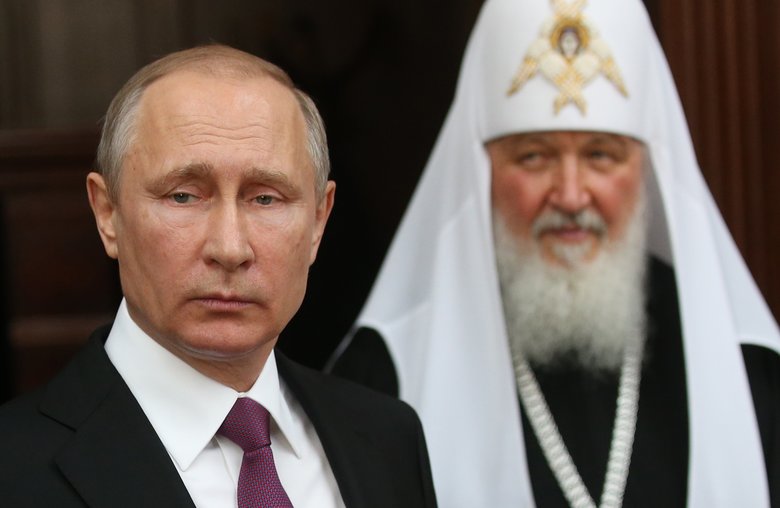
I’m in the odd position of being a liberal and an Eastern Orthodox Christian. Eastern Orthodoxy is the least liberal of the strands of Christian thought, and indeed is the Christian Church friendliest to monarchy and a heavy mixing of church and state. In my attempts to engage Catholic integralism as both a Christian and […]
Suppose I Wrote a Book on Integralism: What Should I Cover?
As I finish copyediting and page proofing for my next book, Trust in a Polarized Age, I’ve been thinking about my next big book project. I’ve become increasingly interested in exploring illiberal political perfectionism, the view that the ultimate duty of the state is to promote the good and the good life for citizens, but […]
The Simplest Argument Against Integralism – The Mortara Argument
In this post, I offer the simplest compelling argument against Catholic Integralism that I know of. It is based on the Mortara Case, where Pope Pius IX, sovereign of the papal states, removed Edgardo Mortara, a Jewish boy, from his Jewish family. Pius IX did so because he discovered that the boy had been illicitly […]
The Common Good Doesn’t Help Us Decide
Integralists and their fellow travelers continue to drive much online discussion in legal and political theory. They propose what many have proposed in the past, that social institutions be structured so as to promote the common good. They have a very specific conception of the common good, but most of the negative online responses to […]
Assess Common Good Constitutionalism With One Question: What Happens to Dissenters?

One of the remarkable things about Adrian Vermeule is that when he speaks, people listen. They even when, perhaps especially when, he shocks the moral conscience of his reader by rejecting traditional liberal pieties about the purpose of government. I endorse most of those liberal pieties, but liberals cannot approach those who dissent with mockery […]
Are Liberal Regimes as Coercive as Integralist Regimes?
A week or so ago, Dave Atenasio published a nice reply to my post arguing that integralist regimes will have a hard time generating requisite levels of stability without lots of coercion. The piece is well-done, so check it out, but I’d like to jump right to the heart of the matter. I concede freely […]
Is Integralism Unreasonable? Yes. Should Integralists Care? Well …
Micah Schwartzman and Jocelyn Wilson’s recent article on the unreasonableness of integralism led to much integralist criticism on Twitter, and even criticism from non-integralist Catholic conservatives. It’s important to recognize that Schwartzman and Wilson expressly state that they’re not trying to engage integralists on their own terms, but to use integralism as the paradigmatic case […]
Are All States Confessional?
One common refrain I hear among anti-liberals, especially on the Christian right, is that all states are confessional states in the sense that they have deep dogmatic commitments whose sectarian character is either publicly recognized or, in the case of liberal states, concealed by dishonest rhetoric claiming liberal neutrality. Much like the common refrain on […]
Integralist Ideal Theory and Non-Ideal Theory
Political philosophers have been discussing the distinction between ideal and non-ideal theory in earnest for about ten years. But they’ve tended to apply the debate to liberal and socialist theories of justice and legitimacy. What happens when we try to apply some of this literature to the new Catholic integralism? There are lots of ways […]